Tuesday, 26 October 2021

How to deal with AI when it comes for your job

If you have ever worried about your job/livelihood with the rise of AI - such headlines don't help.
E.g. The Guardian - A robot wrote this entire article. Are you scared yet, human?
Forbes - Robots Aren't Taking Over The World (Yet) 

Quick background:
The current wave of AI is improving prediction which is a critical part of intelligence. Be it predicting whether the stocks will go up/down, traffic, or predicting whether to wear a jacket because it will be cold - prediction precedes and is a necessary part of intelligence. And the prediction is getting cheaper by the year.

What does this mean to current/future jobs?

If the prediction can be codified with a good/great return on investment, that job/task is likely to be automated by AI. 
E.g. Reading X-rays or biopsies, credit card fraud detection, pre-authorizing healthcare bills etc. 

The potentially scary side is, some parts of many jobs and all parts of some jobs would be open to this automation. Although it is potentially exciting if you are the one automating or implementing the AI. 

Some studies suggest that by 2030, intelligent agents and robots could replace as much as 30 percent of the world’s current human labor. I think the phrase "current human labor" is critical there. The nature of jobs will change so we might not have such a (or any) drastic change in the labor market. When the printing press was invented, when computers were newly introduced - many jobs were lost...and many were created. So it's not all bad news... however, there is some potentially bad news.

The (potentially) bad news:
Previous technologies largely didn't infringe on the sacred judgment capability of humans as machines weren't as good as humans at it... until recently. From the self-driving cars of Tesla to the AlphaGO AI - machines are now better at the judgment in many tasks when compared to us...and they are rapidly improving. And they don't ask for fair wages either.

So what's next?
Some of the smartest people disagree on what's next. Doom? Unprecedented progress? More inequality?
In this context - I have a macro view that there will be changes even though I don't know how profound they will be. Then comes the more practical micro view - What should I do?

My way to deal with this is to arm myself with how I can be a part of this wave of change to make my tasks/career/life better. One small way to start is to read and write more about this subject to make it a part of the future of my work. 

And If...rather When AI becomes more commonplace and comes after my job... I'd like to be with it than against it.

Source/Suggested reading: Prediction Machines by Ajay, Joshua and Avi

Thursday, 31 December 2020

My ROI on Pandemic Networking via LunchClub, LinkedIn and Shapr

Like many WFH workers, I was looking for ways to network/meet people/have conversations with other humans that weren't my co-workers.

I experimented with a few platforms with the intention to meet interesting people. Disclaimer: I wasn't selling anything to anyone. And I didn't ask anyone for a job/internship when I spoke with them. I just wanted to build my network.

1. LunchClub

As of Dec 11, I've had video conversations with 60-65 people in the past six months. This platform has really taken off during the pandemic and it's easy to see why. I've met people from around the globe and about 75% of the people I met, they were pretty fun to talk to and I enjoyed the conversations. I've had follow up chats with some of them as we got along pretty well.
The platform does all the grunt work of setting up the meeting with other professionals (based on your availability and preferences) and all you have to do is show up for 30-45 mins. I also got an opportunity to conduct a workshop for 3 days on Business Finance for 30 entrepreneurs in Toronto thanks to someone I met on the platform. I had no intention of teaching, it just randomly came up and I said yes. 'Cause, why not!
My rating - 9 out of 10

2. LinkedIn - 

I reached out to about 18 people over the last 6 months. The short messages were sent through a connection request mentioning that I was interested in what they were doing and I was looking for a chat. I never mentioned that I wanted a job/contract from them (although, it's possible it could have been interpreted that way). I had an incredible hit rate of 3 out of the 18 people accepting the request but only one of them replied to my message. Apparently, it's common to receive a bad response rate on LinkedIn although there are exceptions. However, for the average user - it isn't easy to make new connections and get a chance to chat especially when you don't share mutual connections with the other person. Although, it is a fabulous resource to learn about people's career journeys and if you share any mutual connections with them to get yourself some facetime.

My rating - 5 out of 10

3. Shapr - 

This app felt like a mix between a dating app and LinkedIn. I had a success rate of about 30-40% but the connections I made didn't go beyond a few messages. It felt like an interesting way to meet people but I uninstalled it within 4 months as most conversations weren't going anywhere.

My rating - 3 out of 10


Tuesday, 23 June 2020

5 Ways COVID is Changing Business and People

How roles have changed during COVID. As humans, we like to predict and control. However, reality has different plans for us and currently, a lot of roles are evolving to more near term focus. This is an overview of what we're seeing -

1. Extreme focus on cash:
Finance always focused on cash but right now, the scrutiny is extreme. And rightly so.

2. Almost no long-term strategic planning:
You can't plan for the next 3-5 years when you don't know what's going to happen next month/quarter. Short-term planning is the new focus.

3. Reimaging how we work:
Not just Facebook, Shopify, Google etc. but also almost all companies are reconsidering the benefits of remote work. They may not make employees permanently remote but even moving from no WFH to WFH 2 days a week would be a big win. That's likely to have a big change in how people commute, where they live and hopefully reduce congestion in cities.

4. Focus on Retention:
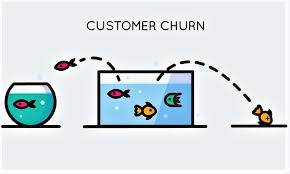
A lot of high-value, cash-burning startups had an excessive focus on new sales and relegated their retention metrics. That's not smart during any period but especially now, retention is critical for survival.

5. Double duties -
Due to paused hiring, some...many people are doing the work of more than one person and it's unlikely to be for extra pay. This is not healthy in the long term, both for the people and the business. But this is where we are.

Monday, 18 May 2020

The Five Most Googled Personal Finance Questions

Here are five of the most Googled questions and my take on them.

1. How to invest money?
This is a common question and this is a good question to ask - this is the first step to attain financial freedom. Thinking and planning about investing is a good start and the common avenues for investment are stocks, bonds, commodities, savings account, property etc. As you might guess, which one to choose depends a lot on your objectives, the amount you want to invest, risk appetite etc. It's best to learn about it by educating yourself and/or consulting a Financial Planner. It's well worth the time and money.

2. How to save money for a house?
Before we get to saving money - which is a quick google search away - the better question might be why do you need a house? Where do you want it? Or how much do you want to spend on it? It's a massive investment and rather than jumping into the "how", it's well worth spending some time on thinking about the "why" and "where" which can save you a lot of time and money.

3. How do income taxes work?

First, let me get this out of the way - Doesn't matter if you're a software engineer, an accountant or a designer - you must be taught (or teach yourself) the basic of how taxes work as it affects your life. The complete answer to this would take more time than a lifetime and it'll still not be complete. However, you can and should know the basics quite quickly. Knowing your after-tax salary, marginal tax rate and tax-shield investments can help you save and spend in a smarter way which your tax accountant or a few google searches can quickly educate you about.


4. How to invest in stocks?
When I see this question, I find it a little concerning. It's great that people want to invest but most people want to get into the stock market to make a quick gain. Trying to pick stocks is extremely risky but the potential of massive and quick rewards plus the relative ease of trading stocks make them a very VERY risky adventure. Attempting to time the market and hoping to beat brokers that invest a ton of resources into building an empire is best avoided. However, you can still profit in the long-term through robo-advisors such as Welathsimple, Questwealth etc. They are much safer and more profitable and do all the work for you for a reasonable management fee which is generally no more than 0.5% in most cases.

5. How much do I need to retire?
The easy answer is - It depends on how much you want, when will you retire, where do you intend to live out your retirement, how much will you spend in retirement, your medical expenses etc. As you can see - it's pretty complicated and hinges on too many variables to get your head around. However, it's a very important question that lets you plan your path to retirement. A common rule of thumb is that you'll need about 70-75% of your pre-retirement annual income during your retirement.
Good luck!

Sunday, 12 April 2020

SaaS Health During COVID

Let's examine the health and well-being of SaaS businesses during COVID.

The Good

1. Attracting more users
By providing cheaper or even free services for a few months, many SaaS companies are attracting more users than usual on their platforms.

2. Business continuity
Most SaaS companies are able to maintain a large portion of their business activities running despite COVID as Work From Home isn't a roadblock to their workforce or core business activities.

3. Growth of Slack and Zoom


Let's take two companies that have REALLY done well during this crisis.
Zoom's monthly user base has skyrocketed by 20X. Even though a lot of these are non-paying users, the revenue growth is phenomenal. The privacy issues are a concern which - if fixed - can lead to further growth and adoption.
Slack's net paying customers have shown over 80% growth in Q1 of 2020 and they continue to grow.
Moreover, these two businesses (along with Microsoft Teams and Gooogle Hangouts) are now the foundation for other businesses to function.

The Bad

1. CHURN
With budget cuts the norm in numerous companies across the globe, that will translate to software cuts in most cases. Therefore, many SaaS companies are and will experience churn and contraction in their ARR which will put immense pressure on liquidity and survival of the business.

2. Lagging effect on revenue
As most SaaS companies bill and collect money upfront, the effect of an economic downturn will be lagging and will become evident only a few months into the future.


The Ugly

Inability to claim wage subsidy
Canada Emergency Wage Subsidy (CEWS) Program provides a 75% wage subsidy to
employers that see a drop in revenue of at least 15% in March 2020 and 30% in the
following months. That is a great move from the Government to protect layoffs and
businesses. 

However, many SaaS companies would struggle to qualify as they are more likely to be hurt
by a reduction in future business than immediate revenue loss. While many firms may have
significantly more revenue than the previous year, they’ve often invested even more in people,
engineering and R&D to prepare for even more sales which are unlikely to materialize.

The Final Word - 

When the dust finally settles, the companies that have managed their cash prudently and have strong business fundamentals will be the most likely to survive. That seems pretty obvious and applies to all businesses. But sometimes the obvious is forgotten, especially in the crazy world of SaaS.

References:
1. https://seekingalpha.com/article/4336336-saas-valuations-covidminus-19-edition-zoom-is-literally-off-charts
2. https://thelogic.co/news/covid-19-roundup-counting-to-30-per-cent/?utm_source=The+Logic+Master+List&utm_campaign=d44658022a-Daily_Briefing_2020_Apr8_1&utm_medium=email&utm_term=0_325d5d3b52-d44658022a-275641105

Sunday, 1 March 2020

SaaS in Five Minutes

What is a SaaS company?
A SaaS (Software as a Service) company refers to any company whose software is licensed on a subscription basis. The payment model is generally on a monthly and/or annual basis. Think Netflix, Salesforce, Square. 

Why should you care about SaaS companies?
SaaS is BIG and it's getting much BIGGER. The revenues of large SaaS companies are in the billions. Companies such as SAP, Oracle, Salesforce are some of the big names while many others are popping up each week and growing rapidly.

How do we analyze SaaS companies?
Most SaaS companies aren't analyzed like traditional businesses where the focus is on the bottom line. When it comes to startup and mid-size SaaS companies, the profits take a backseat to a few other SaaS specific Metrics.
Here are some of the most important ones - 

1. MRR (Monthly Recurring Revenue)
MRR is the monthly payments the company can expect to receive from its customers. This metric normalizes the big one-off sales and provides a baseline to measure business performance. MRR is helpful to predict cash flow, support strategic planning and enable a quick comparison with competitors.

2. CAC (Customer Acquisition Cost)
Customer Acquisition Cost is the money spent on Marketing and Sales to acquire a new customer. This metric directly influences the profit made from each customer which is critical for the growth and sustainability of a SaaS company. A low CAC allows for freeing up cash flow that can be reinvested into the business which can fuel rapid growth.

3. Churn
Knowing the rate of Churn both on a customer and on a revenue basis is critical. A higher churn means losing the upfront Marketing and Sales effort to acquire that customer. This metric is critical to help understand whether the business is sustainable

4. GDR & NDR (Gross & Net Dollar Retention)
Gross Dollar Retention refers to the extent of the MRR of the customers from a year ago that is retained and excludes any expansion of revenue for those customers. Net Dollar Retention includes Expansions. 
GDR cannot exceed 100%, unlike NDR which can.

To learn more, here are a couple of great resources:
1. https://www.forentrepreneurs.com/saas-metrics-2/
2. https://blog.hubspot.com/service/saas-metrics

Monday, 24 February 2020

4 Tips On Financial Sustainability

I'm always fascinated by how much finance affects all our lives (for better and for worse) through the decisions we make and the ones we don't. To achieve balance, something that's Sustainable is a high priority for me. And learning from my mistakes (and from others'), these are four things that differentiate the ones who achieve financial sustainability and those who wish they could.

1. Finance is less accounting, more psychology


A sweater or those cool sneakers that are 70% off are generally a trap. A lot of people know that but continue to consistently fall for it. When the wise see 70% off, they know that it is still 30% on. There's no point giving that 30% when you can give 0% and move on.
And if you think you really need it, ask yourself whether you would be willing to pay the full price for it? If yes, then you should go ahead and buy it. Else, it's something you can live without and should. Your wallet and the environment will thank you for it.

2. Your money shouldn't take a day off

You should take a vacation from time to time. But your money shouldn't. When you're chilling with Netflix, your money should be working for you. Your savings should ideally not get a single day off and those with wealth know that. Auto-deposits are one way of ensuring that your money is always making more money.

3. Buying eco-friendly-stuff doesn't prove you're pro-sustainability


Buying pins and badges and even eco-friendly products aren't the best way to show your support for the cause. Not buying is the best way. Most eco-friendly products have to be manufactured, shipped and finally sold. Don't buy them, that's much better.
However, when you need to buy something that you truly need - and I hope your definition is quite strict for this - then look for an eco-friendly option. Else, just enjoy a walk in nature rather than in a store.

4. Financial sustainability isn't tough, perseverance is 

This is more of a philosophy than a specific trick but it's the most important. Youtube, online articles, your family and friends can all teach you enough skills to lead a pretty financially savvy and sustainable life.
That's the easy bit.
The real challenge and where a lot of people struggle is the unwillingness to consistently build, track and follow their goals. Don't expect improvements in a few months because even the most skilled need time to build wealth and financial sustainability.
Keep at it and you will get there.

Wednesday, 15 May 2019

Sustainability in Sports

Apart from my passion and the alliteration, Sustainability and Sports have many other common themes that are quite intriguing. Here are some of my favourite ones -

1. Ajax Football Club's stadium -
Ajax is a footballing giant and when it comes to sustainability, it is an amazing monster. All the seats in its stadium are made from sugarcane and it is one of the few carbon-neutral sporting arenas in the entire world. It uses a combination of wind turbines and 4,200 solar panels to fuel its needs.

2. The world's most sustainable football (soccer) club -
This enviable title was bestowed on Forest Green Rovers from England because it implemented the Gold standard in environmental performance - the Eco-Management and Audit Scheme. Some of their initiatives include - sourcing low energy floodlights, using an organic pitch by avoiding manmade chemicals and providing local and organic food for both players and fans at the venue.

3. Artificial turf -
Using recycled plastic, the new generation of football/soccer pitches need neither trimming nor fertilizers. It's cheaper to maintain and better for the environment. Football heavy-weights such as FC Barcelona, Liverpool, Man United etc. have all incorporated it in their stadiums along with dozens of other sports teams.

4. Clothes and cleats -
Major sports manufacturers are using recycled plastic to make shoes, clothes and even football. A football jersey consumes approximately 13 bottles and over 16 million bottles have been successfully recycled through this process.

5. LEED certification -
The Boston Red Sox, Sacramento Kings and many others have LEED-certified arenas. They use solar panels to reduce greenhouse emissions and also utilize wastewater management practices.


Tuesday, 26 March 2019

Tips for pitch decks

A great business idea becomes even better with a strong pitch deck. There are some great templates at the bottom and some advice on how to use those templates down here - 

1. Zero clutter policy
Too much information is neither good for the eyes nor for the attention spans of most people. An idea a slide is a good rule of thumb and an image or two that can show your point is even better.

2. Simple problem and solution
Provide a simple (not dumbed-down) problem you are addressing that serves as your hook. Then, show what is your solution to the problem and why it is worth investing in. Backing the solution up with a strong business plan + financial projections is almost the norm.

3. The team
You have a great business plan but why are you the best people to execute your plan? Talk about your team, the experience and the relevant and related achievements. This is as (maybe more) important than the business idea itself when the business is very young.

4. The competition
Even if you are Google or Amazon, always mention your competitors. If you think you are in a league of your own with no competitors, you are probably going to fail. Listing your top competitors provides a realistic picture to the audience.

5. Practice your pitch
A good deck becomes unforgettable when used by a masterful presenter. Practice your pitch over and over - pitching to Venture Capitalists isn't the best time to try a spontaneous speech/pitch. Watch TED talks and/or go join Toastmasters - there are enough resources out there to help you hone your public speaking and it is more important than what the prettiest deck can deliver because the investment is not on the deck but on you.  

A few pitch decks worth looking at - 

Tuesday, 12 February 2019

Best practices for financial planning (and executing)

Financial planning is important, let's start there. However, for non-financial planners (and sometimes financial planners) it can be a source of crippling trauma coupled with a feeling of comprehensive mental breakdown. Or worse.

Worry not, here's some antidote for you i.e. some of the best practices that pretty much apply for both businesses and individuals.

1. Focus on the narrative behind the numbers -
We are expecting a 20% sales increase; you are expecting a 5% raise at work etc. All of that is the easy bit to incorporate in your financial plan. The difficult/important bit is - WHY are you expecting it? The reason, research, story behind the number is critical for any decent business plan.

2. Get buy-in -
A financial plan is useless on its own. The acceptance of the people affected by it is unbelievably important. The members of the family in case of an individual and senior executives in case of businesses are stakeholders whose involvement and acceptance determines the ultimate success of the financial plan.

3. Reduce reliance on yourself and your memory -
One of the most common advice that applies perfectly to financial planning is - automate and eliminate processes. Use online tools that automate your bank transactions, email financial statements to you/your customer automatically are some simple solutions that automate important tasks and frees you and your memory to focus on other important things (such as playing soccer).

4. Monitor and adapt -
If a financial plan is made every year or quarter and not adapted when circumstances change, it is pretty obvious how hollow the effectiveness is going to be.
A financial plan is more of a process than a final outcome. You have to always adapt and improve.

5. Include the how -
To improve the effectiveness of your financial plan - include details of how you plan to get there. Of course, you won't know everything but some details can form a great starting point. An increase in wages is forecasted - include the expected headcount; for an increase in revenue - add a note on new target markets etc.

6. Make it visual -

I know, I know - financial plans aren't the most visual things on our planet. However, some graphs and charts of critical items such as revenue growth, profit margins, customer acquisition etc. can be shown visually to increase impact because human beings are visual creatures. Also, a bit of colour in the usually black and white financial plans (without making it look like the festival of colours) will not be out of place.

Saturday, 19 January 2019

How a bit of accounting could do quite a bit for you

Unless you are an accountant, you probably don't love accounting. Even some accountants don't and no one can blame them. No wonder, accounting and most accountants have never made it to the cover of Vogue.
However, smart people such as Warren Buffet endorse it highly and even suggest that one should never pick stocks unless one understands accounting. Even if you don't want to pick stocks, there are other benefits where a little working knowledge of accounting can help out a lot.

1. Managing daily finances
Every company and individual can benefit from making budgets. It helps to plan, organise and better manage the future and keeps you in control. Financial literacy isn't difficult to attain and its benefits are large.

2. Tracking and reporting
There's a lot of truth to - you can't control what you don't measure. Accountants are taught to be obsessed with tracking and reporting. That's almost a daily requirement. For non-accountants, the habit of tracking their goals, habits, time etc. can help reveal patterns that they weren't aware of. Once you know the problem, it becomes much easier to diagnose.

3. Documenting and auditing
Audit documents, expenses receipts, verification of vouchers etc is not the prettiest part of an accountants job. However, these habits and skills ensure records are well maintained and available for future use whenever there's a need. It is easy to over-rely on memory and accountants outsource it to detailed documents. This micro-habit can easily be inculcated by anyone to reduce moments when we kick ourselves for not remembering something vital.

4. Knowing your debits and credits
Like it or not, we have to deal with bankers and other financial service providers. You can get better deals (or at least avoid bad ones) if you can speak their language. Knowing the basics of your debits and credits doesn't take much time and will serve you quite well. Bonus - your CPA will be so proud of you!

5. Planning and forecasting
Finally, scenario planning and forecasting is an underrepresented but vital skill for accountants (and everyone else). This skill can help most others in their jobs and life as well. Give it a try.


Monday, 7 January 2019

Non-business skills (including procrastination) that add value to business skills

Finance, strategy, accounting - all of those are good to know and nice to have. However, to sign the deal, we all need a little more. Some of these non-business skills can be that missing link.

1. A bit of humour -

You don't need to be a comedian (but if you are, good for you). For the rest of us, a safe joke or two (not 8 or 10, it is business after all) can lighten the room. It can elevate you from just another potential client/employee to a friend. Plus, it is easier to do business with people you are comfortable with i.e. friends and share a joke or two with them.

2. A strict cell phone ban -
Unless you are expecting a call for the presidential nomination, do not text, answer or even look at your cell phone. Establishing trust and empathy with eyes on the screen is not possible.

3. No fluff -
Contrary to what we might have experienced in classrooms and even in some boardrooms, fluff won't get us far. Save the jargon, be to the point and let's all get home on time for dinner.

4. Logic and storytelling wins over pretty slides -
This rule applies because the idea is and should always be at the core of the presentation and not the artistic use of PowerPoint themes and 'free' images pawned off the web. (SideNote - certain classrooms are an exception, you know what I'm talking about)

5. Remember to procrastinate a little -
Apparently, ideas tend to be more creative when you take a little time instead of diving right into them. So, go on and take some time to not do what you should be doing...so that you can do it better.
(Scientifically explained (with humour) in this TED talk - https://www.youtube.com/watch?v=fxbCHn6gE3U)

6. Learn something unrelated -
Having skills that have nothing to do with business skills can be a great asset. It makes great conversation material because even business folks tend to be human after all.
(Suggested learning - Juggling, Rubik's cube and juggling a bunch of those cubes)

Thursday, 13 December 2018

Six reasons why the world is not treating climate change as an emergency

Climate change is awful, sustainability is awesome. Although this is pretty well established, it is stupefying how many people don't act on it or have the immense cheek to outright deny it.
Here are my six reasons (with help from sources mentioned below) to explain why the entire world isn't rushing to fight climate change right now (and has more to do with psychology than the science behind climate change) -

1. What's in it for me attitude 
We - as humans - generally think and fend for ourselves (and for our families at best). Thinking for the entire world is neither easy nor common. Moreover, even if we do make that leap, what's the reward I get for fighting climate change? It is difficult to convince someone with more pressing concerns of making ends meet or focused on making a ton of money when the reward for saving the world cannot be individualized.

2. Short-term nature 
Like it or not, most of us are better at making short-term decisions. We'd prefer tangible short-term benefits now and would forgo more lucrative rewards available in the future. The reward here is not becoming extinct (or avoiding catastrophic damage) which should be a great long-term reward but it loses in front of a more comfortable way to access oil and continue driving. Moreover, the reward of our sacrifice today would accrue to the future generations and creates another layer of disconnect.

3. Inherent laziness
Humans are inherently lazy. It makes evolutionary sense to conserve our energy and take the shorter/easier path. Many people don't change until the situation becomes dire, and many tend to stick it out even when it is (case in point - people who stay back despite hurricane warnings). We suffer from an optimism bias that we can "solve" anything; we cured measles, we are curing cancer and we will somehow cure climate change.

4. The framing of climate change
Most people are aware of the dire consequences of continuing with the present way of living and economic activity. However, fast fashion, fracking and fossil fuels continue to dominate our economy. The climate change narrative has failed to capture the imagination of enough people which would lead them to action. Some psychologists suggest loss framing and using emotions instead of only facts to have a bigger impact. Irrespective of the better alternative, reading another scientific study telling us the world is getting hotter by 2 or 3 or 20 degrees won't have enough impact to create positive outcomes.

5. Diffusion of responsibility
This is my personal favourite. While working in group assignments, when there is no accountability/responsibility almost nothing gets done. Unless you have people/companies/governments that are all held responsible and are not allowed to get away with it, it is a little unlikely that material change will take place. The Paris Agreement is a good start but the accountability is pretty hard to measure and enforce (and powerful politicians calling climate change a hoax is so funny that it is sad).

6. Don't want to be first "sucker"
When the going gets tough, very few people are willing to be the first one to take the plunge. However, some companies and countries have taken the sustainability route and experienced great progress (case in point - Patagonia and Costa Rica) but they are treated as an exception or worse ignored.

The situation is pretty clear - change is the only way to solve this planet threatening predicament. Thankfully, scientists have overwhelming evidence on how and what to do with clear steps to be followed to solve this issue. Ironically, the process to get started - which is probably half the battle - seems almost impossible... which is why climate change is not just a problem of science but also a problem of human behaviour and psychology.

References -
1. Kluger, J. (2018, October 08). Why We Keeping Ignoring Climate Change Warnings. Retrieved from http://time.com/5418690/why-ignore-climate-change-warnings-un-report/
2.   Mazutis, D., & Eckardt, A. (2017). Sleepwalking into Catastrophe: Cognitive Biases and Corporate Climate Change Inertia. California Management Review, 59(3), 74–108. https://doi.org/10.1177/0008125617707974

Wednesday, 28 November 2018

Seven highlights from the world's first ever Blue Economy Conference

Let's start with what is a blue economy? Unsurprisingly, it involves monetizing the oceans... however, in a sustainable manner to improve livelihoods and ocean ecosystem health. It focuses on - amongst other things - maritime transport, fisheries, renewable energy and ocean tourism. The oceans are a great source for growth (and unfortunately, exploitation).

Now, coming to the key highlights from the first ever Blue Economy Conference that took place between 26th and 28th November, 2018 in Nairobi, Kenya:

1. Presence of 18,000+ delegates from 170+ countries. It was co-hosted by Japan, Canada and Kenya.

2. Justin Trudeau announced Canada's suuport to the United Nation's Decade for Ocean Science and announced funding for Friends of Ocean Action Group. He reiterated the commitment to the Canada's Ocean Protection Plan directed towards protecting the coastal regions through investing 1.5 Billion Dollars over a period of five years.

3. Kenya will establish a Blue Economy Bank with an aim to develop this sector.
4. 40 Million Euros are set aside for the development of aquaculture in African countries.
5. Seychelles issued the first every blue bond worth 15 Million Dollars.


6. Sweden pledged 33.3 Million dollars to provide impetus for the transition towards a blue economy.
The strategy is to help achieve SDG - 14: Conserve and sustainably use the oceans, seas and marine resource for sustainable development (although, life below water is much easier to remember).

7. Toyota has pledged investments in renewable energy in Africa and generation of energy from waste in Mombasa.


References -
a. Pscu. (2018, November 28). AU honours Uhuru for world's first Sustainable Blue Economy Conference » Capital News. Retrieved from https://www.capitalfm.co.ke/news/2018/11/au-honours-uhuru-for-worlds-first-sustainable-blue-economy-conference/
b. Wambu, W. (2018, November 28). Pledges to implement key blue economy outcomes. Retrieved from https://www.standardmedia.co.ke/article/2001304413/pledges-to-implement-key-blue-economy-outcomes
c. Statement by the Prime Minister on the Sustainable Blue Economy Conference. (n.d.). Retrieved from https://www.newswire.ca/news-releases/statement-by-the-prime-minister-on-the-sustainable-blue-economy-conference-701468592.html

Tuesday, 13 November 2018

Why social finance deserves more of your attention


Social finance (not to be confused with socialism) is about making money and not screwing up our planet. The and is what makes it special and critical for our future and also opens up great opportunities for growth.
Here are four (out of the many) reasons for social finance -


1.     High performing businesses
If you are looking to invest in businesses that achieve high returns, take a look at the companies focusing on their ESG (Environmental, Social and Governance) performance. These are outperforming those that aren’t. That in itself is a good enough reason to take notice and also follow suit.
Swiss Re, SBI, BlackRock and many others are using ESG metrics to guide billions of dollars of investments.

2.     Global trend
The global trend is to move towards cleaner technology, sustainable business and overall integration with the community. The days of profit over ethics are slowly but surely changing.
Companies such as Patagonia, Natura and Dassault Systemes are a great example that have capitalized on this trend.

3.     Planet’s critical condition
Let’s face it, the planet is in the Emergency room and is only getting worse. However, it is not the planet that needs saving. The planet will be fine without us, it is us that might not survive the impending doom of climate change.
Businesses are a chief reason why we got here, and they are showing promise to get us out of this predicament if we deploy ourselves and our resources towards it.

4.     Chance to be on the right side of history
This is the ethics argument. We are quite possibly at a Tipping Point in history. Our actions in the next few years/decades will decide not only our fate but also of the next generation and probably humanity in general (so, no pressure). It is a glorious opportunity to undo the harm of the past 100 or so years and change our course.
For the better.

How to deal with AI when it comes for your job

If you have ever worried about your job/livelihood with the rise of AI - such headlines don't help. E.g. The Guardian - A robot wrote th...